













Compliance issues in large commercial kitchens
Compliance in large commercial kitchens is governed by the ‘Hygiene Package’. This set of European regulations came into force on 1 January 2006. This legislation sets out clear objectives. However, it allows professionals a certain degree of flexibility regarding the methods to be employed.
Health and safety: a regulatory requirement
The regulatory framework is based primarily on three european texts (Regulation (EC) No 852/2004 on food hygiene, Regulation (EC) No 853/2004 on products of animal origin, and Regulation (EC) No 178/2002), which require a Health and Safety Plan and the implementation of the HACCP methodIn France, Article GC 21 of the regulations on fire safety in premises open to the public (ERP) sets out these requirements:
- Appliance maintenance and instructions: Cooking and reheating appliances must be regularly maintained in accordance with the instructions in French provided by the manufacturer and the installer.
- Chimney sweeping and extraction systems: Chimney flues must be swept and checked to ensure they are clear at least once a year. In addition, systems for extracting stale air, steam and grease must be cleaned as often as necessary. This also applies to fans and heat recovery units.
- Cleaning the filters: Grease filters must be cleaned or replaced at least once a week.
Maintenance logbook: A maintenance logbook recording all inspection dates and work carried out must be attached to the establishment’s safety register. Each place must therefore ensure that temperature requirements are strictly adhered to and that the premises and equipment are kept clean. Staff must also be trained in good hygiene practices.
The operator’s responsibilities and the risks in the event of non-compliance
The operator bears full responsibility for the hygiene standards and food safety of the food served. They may be held liable under civil and criminal law in the event of a breach. The consequences of non-compliance can be severe: fines, or the temporary or permanent administrative closure of the premises. Legal proceedings may also be brought, which could include charges of endangering others.
During health inspections, major non-compliances are found in 9 per cent of inspections. Some of these may result in the closure of establishments.
This is why we recommend that professionals seek the support of experts such as IGIENAIR Commercial Kitchen. This approach ensures that commercial kitchens are maintained in accordance with regulations and helps to avoid these risks.
Best practice for the effective maintenance of commercial kitchens
Pour assurer la conformité et la performance des cuisines professionnelles, l’application de bonnes pratiques d’entretien est fondamentale. Nos années d’expertise dans ce domaine nous ont permis d’identifier les méthodes les plus efficaces.
Organisation et planification des opérations
Well-organised preventive maintenance is the cornerstone of an efficient professional kitchen. Firstly, draw up a clear schedule setting out daily, weekly, monthly and annual maintenance tasks. This document must be accessible to all staff to facilitate the allocation of tasks.
To optimise this planning, carry out a comprehensive assessment including a detailed inventory of equipment and an evaluation of its condition. Schedule major servicing before busy periods to avoid any loss of efficiency.
Standard maintenance plan for a compliant commercial kitchen
A structured maintenance plan is the key to ensuring that commercial kitchens comply with health and safety standards. At IGIENAIR Commercial Kitchen, we have developed a methodical approach covering all maintenance intervals.
Daily and Weekly maintenance
Daily maintenance forms the basis of proper hygiene. Every day, ensure that work surfaces, equipment and floors are cleaned and disinfected. Also check that drains are clear.
In accordance with Article GC 21 of the Installation Guide for Catering Cooking Appliances, ensure that cold rooms are thoroughly cleaned on a weekly basis, as well as the cleaning or replacement of grease filters at least once a week to prevent any risk of fire.
Monthly and quarterly maintenance
There are no fixed guidelines regarding cleaning and maintenance frequencies: these depend directly on the site’s layout, the number of covers served and the type of food production. In accordance with Article GC 21, cleaning and degreasing operations must be carried out as often as necessary, and at least once a year. It is therefore essential to carry out an initial audit. This enables a bespoke maintenance schedule to be drawn up, perfectly tailored to your air handling and ventilation systems.
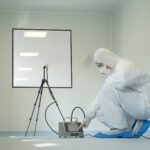
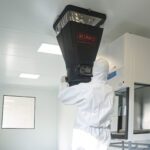
This audit enables us to assess the level of fouling in the installations at a given point in time. However, this condition may change depending on the site’s activity and the client’s production volume. It is therefore essential to draw on the expertise of professionals such as IGIENAIR Commercial Kitchen, who are able to assess the condition of the facilities during each visit and, if necessary, recommend an adjustment to the frequency of visits. This approach enables the maintenance programme to be tailored, on a long-term basis, to the actual needs of your facilities and their level of soiling.
Call in an expert: professional services to ensure compliance
Calling on experts to maintain large-scale commercial kitchens represents a strategic investment for operators who are committed to ensuring their facilities comply with regulations and perform to the highest standards.
Why outsource the maintenance of commercial kitchens?
Outsourcing maintenance offers many significant benefits.
- Firstly, it provides access to specialist technical expertise. Experienced technicians are trained in the specific features of professional kitchen equipment.
- Unlike an interview conducted in-house by the organisation’s staff, using an external service provider ensures that periodic interviews are rigorously documented.
- Professional maintenance ensures compliance with the strict hygiene standards set by the National Health Safety Agency, thereby avoiding potentially severe penalties.
- Furthermore, regular maintenance plays a significant role in fire safety. It helps to remove grease build-up in extractor hoods and flues.
What a specialist partner such as IGIENAIR guarantees
A partner such as IGIENAIR brings specialist expertise in ultra-cleanroom management in demanding environments. Our services include, in particular, facility audits, dust removal and disinfection of air duct networks, as well as the inspection of air handling systems. They also include degreasing and filter replacement, as well as deep cleaning of kitchen equipment and the kitchen working environment. We stand out for our bespoke solutions for catering businesses, hotels and local authorities. Our expertise includes degreasing kitchen installations, auditing ventilation systems, and applying innovative technologies such as Ecoseal, which ensures the airtightness of extraction ducts and reduces duct blockages. By choosing an IGIENAIR partner, you benefit not only from guaranteed regulatory compliance, but also from facilities optimised for long-term performance and bespoke support from qualified experts.
FAQs
Q1. What are the main regulations that must be complied with in large commercial kitchens?
Large commercial kitchens must comply with the European ‘Hygiene Package’, which includes, in particular, Regulation (EC) No 852/2004 on food hygiene and Regulation (EC) No 853/2004 on products of animal origin. These regulations require the implementation of a Food Safety Management Plan and the application of the HACCP method.
Q2. What are the risks involved in the event of non-compliance in a commercial kitchen?
The consequences of non-compliance can be serious, ranging from fines to the administrative closure of the premises. The operator may also face legal proceedings and may be held civilly and criminally liable in the event of a breach of health and food safety standards.
Q3. What are the best practices for the effective maintenance of commercial kitchens?
Effective cleaning relies on rigorous operational planning, the use of appropriate techniques such as the TACT method (Temperature, Mechanical action, Product concentration, Contact time), and regular staff training on hygiene standards. It is also crucial to draw up a detailed schedule of daily, weekly, monthly and annual cleaning tasks.
Q4. What is the recommended frequency for maintaining the various items of equipment in a professional kitchen?
Maintenance must be carried out at different periods of time: daily for work surfaces and floors, weekly for cold rooms and extractor hoods, monthly for ventilation systems, and annually for a full compliance audit and thorough cleaning of the air handling systems.