













Visit IAQ monitoring (Indoor Air Quality) has become a major issue for establishments open to the public. Did you know that we spend more than 80% of our time in enclosed environments, and this proportion can be even higher for young children? Schoolchildren, in particular, spend almost 90% of their time in enclosed spaces.
What's more, higher CO2 concentrations are directly associated with a decline in occupants' cognitive performance, affecting learning and general well-being.
IAQ monitoring enables you to meet your obligations while ensuring the health and well-being of the people you welcome.
The regulatory framework in force since 2023
IAQ monitoring in ERP buildings has undergone a significant evolution with the new regulatory framework that came into force on January 1, 2023. These changes are the result of a process of continuous improvement, the fruit of feedback on the previous system and lessons learned from the health crisis concerning ventilation of premises.
Reference texts (laws, decrees, orders)
The legal basis for the obligation to monitor the indoor air quality dates back to the Grenelle II law. Article 180 of the French National Environment Commitment Act no. 2010-788 of July 12, 2010 made such monitoring compulsory in certain ERP buildings, notably those housing sensitive populations or those exposed over long periods.
The current system is based on five main texts published on December 27, 2022:
- Decree no. 2022-1689 amending the Environment Code (articles R.221-29 to R.221-37)
- Decree no. 2022-1690 on the evaluation of ventilation systems and measurement of pollutants
- The order amending the order of June 1, 2016 on monitoring procedures
- The order amending the order of June 1, 2016 on the terms and conditions for presenting the appraisal report
- Order setting the conditions for direct-reading CO2 measurement
These texts were drawn up as part of the 4th National Environmental Health Plan (PNSE 4) «One environment, one health» (2021-2025), which defined the framework for this regulatory revision.
ERP concerned in 2023 and 2025
Since January 1, 2023, three categories of facilities have been subject to this monitoring obligation:
- Group childcare facilities for children under 6 (crèches, day nurseries and kindergartens)
- Primary and secondary educational and vocational training establishments (nursery schools, elementary schools, middle schools and high schools for general, technological or vocational education).
- Extracurricular and extracurricular leisure activities for minors
Since January 1, 2025, the scheme has also been extended to other establishments:
- Social and medico-social facilities attached to healthcare establishments
- The long-term care structures of these facilities
- Certain medico-social establishments and services governed by the Code de l'action sociale et des familles (such as EHPAD)
- Specialized prisons for juveniles, juvenile wards in certain prisons or units dedicated to the care of juveniles.
It is important to note that for these establishments, whose integration is scheduled for 2025, the regulations have yet to be implemented, in the absence of an implementing text specifying the exact terms and conditions. Nevertheless, these establishments are strongly encouraged to take air quality into account in their action plans.
Exclusions and special cases
Certain establishments have been excluded from the monitoring system. This applies in particular to indoor physical activity and sports facilities where aquatic, bathing or swimming activities are practiced. This exclusion is explained by the fact that these premises are already considered as «specific pollution premises» by the French Labor Code, and must comply with the ventilation and sanitation requirements defined in this regulation.
Other exclusions concern certain areas within the plants concerned:
- Technical rooms
- The kitchens
- Sanitary facilities
- The offices
- Staff housing
- Circulation
- Specific pollution areas
This means that only teaching, activity and living areas are subject to compulsory supervision.
To meet these regulatory obligations while ensuring the health of your facility's occupants, professional IAQ monitoring is essential. At Igienair, we offer IAQ monitoring tailored to the specific regulatory requirements of your type of establishment. Our expertise will enable you to comply with this new regulatory framework while guaranteeing a healthy environment for your occupants.
To sum up, this new regulatory monitoring system comprises three key routine stages: an annual assessment of ventilation systems, including CO2 measurement, a self-diagnosis every 4 years, and the development of an action plan updated annually. Our experts are at your disposal to help you implement a monitoring strategy tailored to your needs.
The 3 pillars of the IAQ monitoring system
The regulatory IAQ monitoring system is based on three complementary pillars, each playing an essential role in assessing and improving the indoor environment of ERP buildings. This structured approach ensures rigorous monitoring, adapted to the various phases in the life of the building.
1. Annual assessment of ventilation systems
Now mandatory every year, the assessment of ventilation systems is the first step in the process. For facilities already included in the scheme, the first assessment must be carried out by 2024 at the latest. This assessment is divided into three essential stages:
- Checking the accessibility and manoeuvrability of windows opening to the outside
- Visual inspection of ventilation systems, including checking for proper operation and air circulation
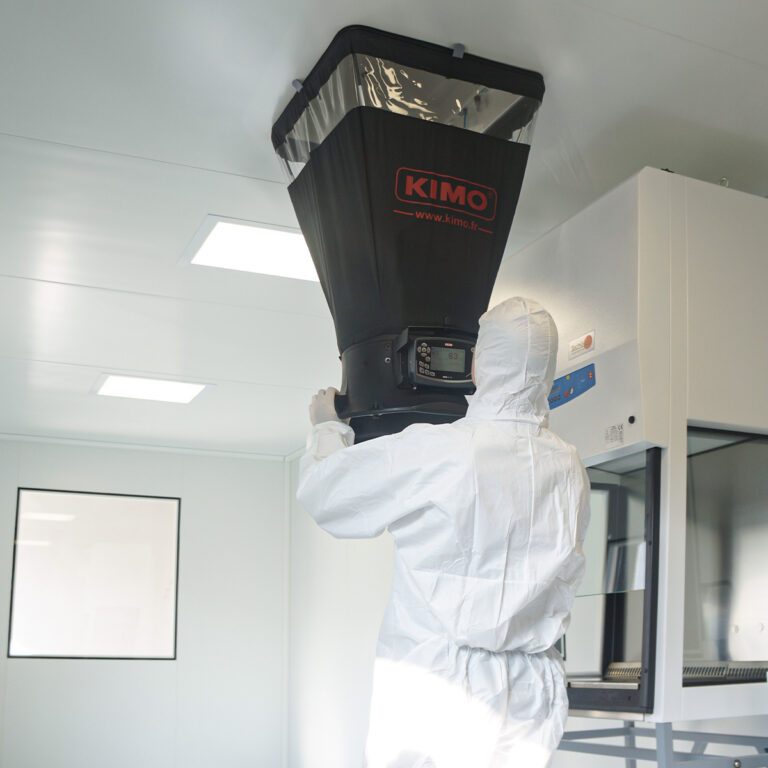
- Direct-reading measurement of carbon dioxide (CO2) concentration in indoor air
This last stage, which represents a major innovation, is carried out during the heating period and under normal operating conditions, over a minimum period of 2 hours during the occupancy presenting the highest risk of confinement. The values measured are then compared with reference thresholds: below 800 ppm, air renewal is deemed satisfactory; above this level, action must be taken to improve the situation; and above 1500 ppm, corrective measures must be taken as soon as possible.
This assessment mainly concerns rooms that are occupied for long periods of time, such as teaching rooms, activity or living rooms, but also catering rooms and dormitories. However, kitchens, sanitary facilities, offices and circulation areas are excluded.
2. Self-diagnosis every 4 years
The second pillar consists of a complete IAQ self-diagnosis. Previously optional, it has become a mandatory step, and must be carried out or updated at least every 4 years. This self-diagnosis covers in particular :
- Identification and reduction of sources of pollutant emissions, particularly from materials and equipment, and from activities carried out on the premises.
- Maintenance of ventilation systems and aeration equipment
- Reducing occupants' exposure to pollutants resulting from work and cleaning activities
To facilitate this process, CEREMA published a practical guide in 2023, featuring methodological sheets tailored to each type of facility. These sheets are an update of those developed by INERIS in its 2019 guide.
At Igienair, we offer you IAQ monitoring adapted to these two regulatory pillars. Our expertise enables you to implement these different monitoring stages rigorously and effectively, supporting you in interpreting the results and implementing the necessary corrective actions. Our B2B approach ensures that your obligations are fully met, enabling you to concentrate on your core business while ensuring a healthy environment for your occupants.
What's more, our monitoring solutions incorporate the latest regulatory and technical requirements, notably for CO2 measurement, which is now a central component of the monitoring system.
3. Measurement campaigns at key stages
The third pillar, which becomes mandatory under the new scheme, concerns measurement campaigns to be carried out at «key stages» in the life of the building that are likely to have an impact on indoor air quality. These campaigns must begin within one month of completion of the work concerned.
The milestones are divided into three categories:
- Structural work (new buildings, extensions, major renovations): requires a complete pollutant measurement campaign, regardless of the surface area involved.
- Small and medium-scale work (modifications to ventilation systems, opening systems, changes to floor coverings): requires complete or partial campaigns based on defined surface thresholds.
- Actions on premises (changes in room layout, workforce or activity): generally involve CO2 measurements only.
The pollutants concerned by these measurements are formaldehyde, benzene and carbon dioxide. Sampling and analysis must be carried out by accredited organizations in accordance with COFRAC standard LAB Ref 30.
Focus on CO2 and the thresholds to be respected
The pollutants monitored within the regulatory framework require special attention. Understanding their specific characteristics and the thresholds to be respected is essential for effective IAQ monitoring. Let's take a look at these substances and their implications.
Carbon dioxide (CO2)
CO2, an odorless, colorless gas, is an excellent indicator of air renewal in enclosed spaces. Regulations now set two reference values for this gas:
- Concentration below 800 ppm indicates satisfactory air renewal
- Above 1500 ppm, air renewal is considered insufficient, requiring immediate corrective action.
At Igienair, we offer you IAQ monitoring including CO2 sensors that comply with regulatory technical requirements: measurement range from 0 to 5000 ppm and accuracy in line with current standards.
Let the specialists monitor your air (Igienair)
To ensure optimum compliance with regulatory requirements, it is essential to call on the services of competent experts. At Igienair, we offer IAQ monitoring tailored to your specific needs as an ERP operator.
Thanks to our Research & Development subsidiaries, ZAACK and NanoSense, we design innovative solutions for precise, continuous analysis of your indoor environment. Our sensors provide real-time monitoring of the main pollutants and parameters essential to a healthy environment.
Our nationwide network of 29 agencies ensures rapid response anywhere in France. Our team of specialized engineers carries out technical diagnostics.
By entrusting us with the monitoring of your IAQ, you benefit from our support
including raising your staff's awareness and implementing an action plan tailored to your specific issues.
FAQs
Q1. How is indoor air quality monitored in ERP facilities?
Indoor air quality monitoring in ERP buildings is based on three pillars: annual assessment of ventilation systems, including CO2 measurement; self-diagnosis every 4 years; and measurement campaigns at key stages in the life of the building.
Q2. What are the CO2 thresholds for ERP buildings?
A CO2 concentration below 800 ppm indicates satisfactory air renewal. Between 800 ppm and 1500 ppm, air renewal is insufficient, and the plant must take action to improve its ventilation strategy. Above 1500 ppm, immediate corrective action is required.
Q3. Which plants are covered by the IAQ monitoring obligation?
Since 2023, nurseries, schools, secondary schools and leisure centers have been subject to this obligation. In 2025, this obligation will be extended to certain healthcare and medical-social establishments, as well as juvenile prisons.