














Indoor air quality analysis will be a top priority for every responsible organization in 2025. We spend an average of 85% of our time in confined spaces, making the indoor air quality (IAQ) a major public health concern.
Indeed, indoor air pollution represents a considerable economic challenge. In France, the cost of poor indoor air quality is estimated at 19 billion euros a year. In the tertiary sector, nearly 20 million people work in environments where the air contains chemical or biological agents. This indoor pollution can cause a variety of respiratory illnesses such as rhinitis and bronchitis, as well as affecting work productivity. Studies show that decreases in concentration and alertness at work are often correlated with increases in carbon dioxide in the air caused by inadequate ventilation.
As building managers, we have a responsibility towards the health of our occupants. In this expert guide, we'll look at the main sources of pollution (heating systems, mold-promoting humidity), effective analysis methods and concrete solutions for improving the indoor air quality of your premises, notably through appropriate ventilation and the judicious choice of low-emission materials.
Why indoor air quality is a major issue in 2025
The deterioration in indoor air quality is a growing challenge for all organizations today. In 2025, this subject has become unavoidable for several fundamental reasons.
Economic costs of indoor pollution
The indoor air quality analysis reveals alarming figures for the economic impact. In addition to the 19 billion euros mentioned above, the indirect costs are considerable. Absenteeism due to respiratory illnesses costs French companies over 3 billion euros annually. What's more, the drop in productivity attributable to poor air quality can reduce cognitive performance by up to 50% in certain working environments.
Poorly ventilated buildings also generate significant additional energy costs. An inadequate ventilation system can increase energy consumption by 15 to 30%. What's more, the accelerated depreciation of equipment and structures due to humidity and pollutants represents an asset cost that is often underestimated by managers.
Impacts on occupant health
Indoor air pollution is causing increasingly well-documented health effects. Immediate symptoms include eye irritation, headaches and chronic fatigue - characteristic signs of sick building syndrome. In the long term, exposure to VOCs (volatile organic compounds) and fine particles significantly increases the risk of developing serious pathologies.
For example, densely-occupied workspaces can have CO2 concentrations in excess of 1500 ppm, the threshold above which cognitive ability declines by 35%. However, these impacts often remain invisible until serious health problems arise.
Responsibility of building managers
The regulatory framework for indoor air quality has been strengthened.
Law nᵒ 2010-788 of July 12, 2010 on the national commitment to the environment, known as the Grenelle II law, made indoor air quality monitoring mandatory for the owner or operator of certain establishments receiving a sensitive public.
Failure to comply with regulatory obligations relating to IAQ monitoring exposes the owner (or failing that, the operator) to a fifth-class fine of between 1,500 and 3,000 euros per site.
Nevertheless, beyond the legal obligation, decision-makers have a genuine social responsibility. Healthy air is a key factor in attracting talent and building employee loyalty. Investing in an indoor air quality program thus becomes a major competitive advantage, with the potential to generate a return on investment of 3 to 6 times the initial outlay through improved productivity and reduced absenteeism-related costs.
Faced with these challenges, how can we effectively identify the sources of pollution present in our buildings?
Identifying sources of indoor pollution in buildings
To effectively analyze indoor air quality, it is essential to precisely identify the different categories of pollutants that affect our working environments. Contrary to popular belief, the air we breathe indoors is generally more polluted than the air outside.
Chemical pollutants: VOCs, formaldehyde, benzene
Chemical pollutants are a major concern in indoor air quality analysis. Volatile Organic Compounds (VOCs) are often present in higher concentrations indoors than outdoors. Of particular concern is formaldehyde, classified as a known carcinogen by the International Agency for Research on Cancer (IARC). It comes mainly from particleboard, insulation and glues used in furniture.
Benzene, also classified as a known carcinogen for leukemia, deserves particular attention in commercial buildings. Other common VOCs include acetaldehyde, toluene and xylene, found in paints, varnishes and cleaning products.
Physical pollutants: fine particles, humidity, radon
This category includes non-living, non-chemical elements. Fine particles, classified according to size (PM10, PM2.5, PM1), penetrate deep into the respiratory tract. In addition, radon, an odorless natural radioactive gas originating from the ground, accumulates easily in poorly ventilated buildings and represents a risk of lung cancer.
Excessive humidity, while not a pollutant per se, encourages the growth of mold and the proliferation of dust mites, thus becoming an aggravating factor.
Origins: materials, equipment, human activities
There are many sources of indoor pollution in professional buildings. Construction and decoration materials (paints, glues, coatings) continually emit VOCs. Equipment such as heating, ventilation and air-conditioning systems can be sources of pollutants if poorly maintained.
Finally, human activities make a significant contribution to indoor air pollution: the use of cleaning products, printing, cooking and tobacco smoke. And let's not forget that outdoor air is also a significant source of indoor pollution (urban environment, road traffic, industry, etc.).
How to analyze indoor air quality effectively
Once the pollutants have been identified, the crucial step is to put in place a strategy to reduce them.’indoor air quality analysis regularity. Several complementary methods are available to building managers.
Use of CO2 and fine particle sensors
Connected sensors are now an essential tool for continuously monitoring air quality. Devices measuring CO2 can be used to assess air renewal, with levels above 1000 ppm indicating inadequate ventilation. In addition, fine particle sensors (PM1, PM2.5 and PM10) warn of particulate pollution.
Professional IAQ diagnosis
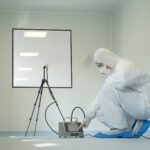
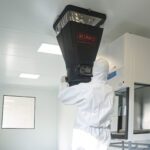
For a complete indoor air quality analysis, the services of a competent expert are essential. These professionals use calibrated equipment to precisely identify VOCs, aldehydes and other specific pollutants. They take air samples over several days to obtain measurements representative of actual occupancy.
Interpretation of results and regulatory thresholds
Interpretation of the data collected is based on guide values established by leading indoor air quality organizations (ANSES, WHO, HCSP, INRS, etc.). In addition, French regulations impose limit values for certain pollutants in establishments open to the public. For example, CO2 concentrations in these establishments must ideally be below 800 ppm, or at least between 800 and 1500 ppm for establishments with the highest CO2 levels.
Recommended inspection frequency
The recommended frequency for assessing indoor air quality depends on the building, its age, the discomfort experienced by occupants, the regulations to which it is subject, and the external environment. It is recommended to carry out a complete diagnosis every 7 years. However, in between these complete diagnostics, it is advisable to carry out targeted annual checks, particularly after renovation work or the installation of new equipment likely to modify indoor air quality.
Certain establishments open to the public are concerned by the IAQ monitoring system imposed by the Decree and Order of December 27, 2022 . These establishments must carry out an annual assessment of their ventilation systems, read CO2 directly, and draw up and update an action plan. Every 4 years they
must carry out a self-diagnosis. Regulatory pollutants must be measured at key stages of the building by an accredited body.
Implement an action plan to improve indoor air quality
Once you've analyzed your indoor air quality, it's time to draw up a concrete action plan. Here's how to take effective action to clean up your building environment.
Choice of low-emission materials (A+ label)
When renovating or refurbishing, choose products with the A+ label, which guarantees low VOC emissions. For furniture, opt for those with NF Environnement or European Ecolabel certification. In addition, avoid formaldehyde-based composite materials, especially in high-occupancy areas.
Optimizing ventilation and air renewal
Effective ventilation is the cornerstone of any air quality improvement strategy. Make sure your system maintains a sufficient air renewal rate, and respects the fresh air flow rates imposed by the French Labour Code and local health regulations. During periods of high outdoor pollution, adapt natural ventilation schedules to the times when outdoor air is purest.
Reducing moisture sources
Maintain humidity levels between 40% and 60% to limit mold growth. Immediately repair any water leaks and properly insulate areas at risk of condensation. Install air extractors in damp areas such as kitchens and bathrooms. Make sure that extracted air flow rates in bathrooms and kitchens comply with the requirements of the French Labour Code and local health regulations.
HVAC (heating, ventilation, air conditioning) maintenance
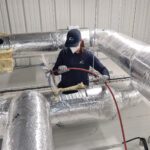
Establish a strict preventive maintenance schedule for your systems. Change filters at least every three months and have ducts cleaned annually. Also check the condition of air handling units, which can become breeding grounds for bacteria if poorly maintained.
Staff training and awareness
Finally, involve your teams in this approach. Organize information sessions on good practices such as regular ventilation of premises and the rational use of cleaning products. A well-informed workforce becomes your first ally in the sustainable improvement of your indoor air quality.
FAQs
Q1. What are the main indoor air parameters to be monitored? The main parameters to monitor are: fresh air supply, humidity and temperature, carbon dioxide (CO2) , carbon monoxide (CO), volatile organic compounds (VOCs) such as formaldehyde and benzene, fine particles (PM1, PM2.5, PM10), mold, bacteria and radon. These pollutants can come from building materials, equipment and human activities. It is also advisable to monitor indoor concentrations of ozone (O3), especially during periods of atmospheric pollution, and concentrations of nitrogen dioxide (NO2), particularly in urban areas, or in the vicinity of heavy road, airport or industrial traffic.
Q2. What is the recommended frequency for monitoring indoor air quality? A thorough assessment is recommended every 7 years. Between these comprehensive assessments, targeted annual checks are recommended, particularly after renovations or the installation of new equipment. Establishments open to the public covered by the Decree of December 27, 2022 must carry out routine audits every year, and self-diagnoses every 4 years. They must measure regulatory pollutants at key stages of the building.
Q3. What are the health risks associated with poor indoor air quality? Poor indoor air quality can cause eye irritation, headaches and chronic fatigue, and increase the risk of developing serious respiratory pathologies. In the long term, exposure to pollutants can increase the risk of cardiovascular disease and certain cancers.