

















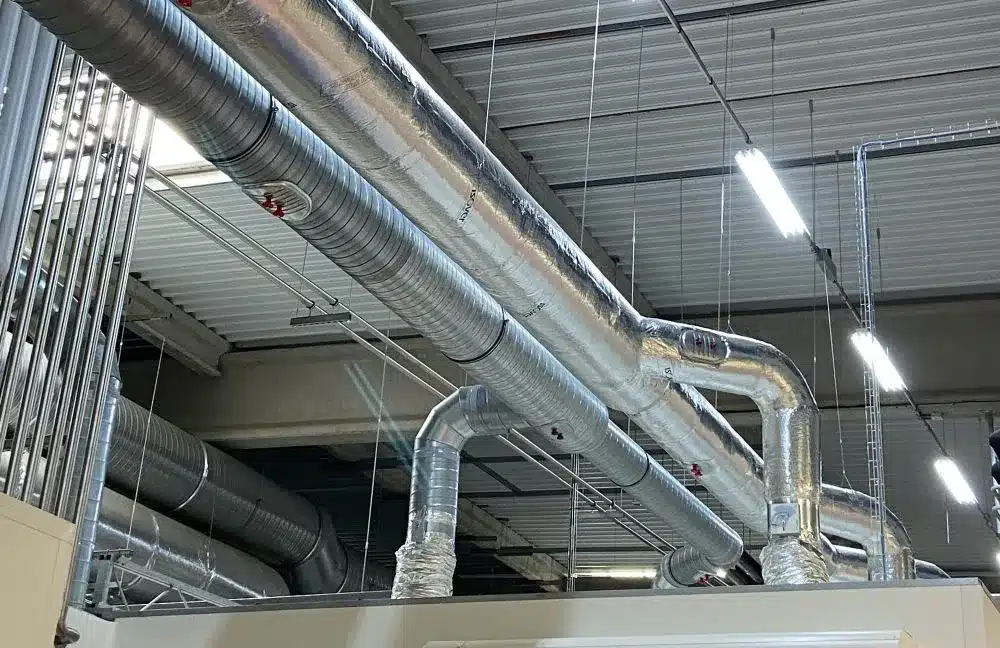
The sealing of ventilation networks represents a technical challenge that is often underestimated in building management. And yet, a leaking network can have major consequences on many aspects of a building's operation.
First of all, energy performance is directly affected by leaks in the ventilation system. Treated air, whether heated or cooled, escapes from supply networks before reaching its intended destination. This results in excessive energy consumption to maintain the desired comfort conditions. In fact, according to technical studies, leakage can account for up to 30% of the total power consumed by fans.
Leak tightness also has a direct influence on the hygiene and cleanliness of ventilation networks. In return air ducts, through which air is extracted from rooms to the engine, leaks can allow the infiltration of particles, dust and other contaminants, compromising filtration and air treatment efforts. Filters become clogged more quickly, and system pressure drop increases. An air leak in the network leads to a reduction in effective flow, forcing fans to work harder to maintain the required performance. This overstress results in an increase in air resistance, and hence in a higher pressure drop, reducing the system's energy efficiency and increasing operating costs.
Overall, the consequences of a leaking network are manifold:
- Significant additional energy costs
- Degradation of indoor air quality
- Reduced acoustic comfort
- Accelerated wear and tear on equipment
- Difficulty maintaining required pressures and flow rates
In the final analysis, the airtightness of a ventilation network is not simply a technical issue; it is a fundamental element that impacts the overall performance of the building, its profitability and the comfort of its occupants. For property managers and technical decision-makers, ensuring this tightness should be a strategic priority.
How to assess and guarantee the tightness of a ventilation network
To guarantee a high-performance ventilation system, precise assessment and implementation of sealing solutions are essential.
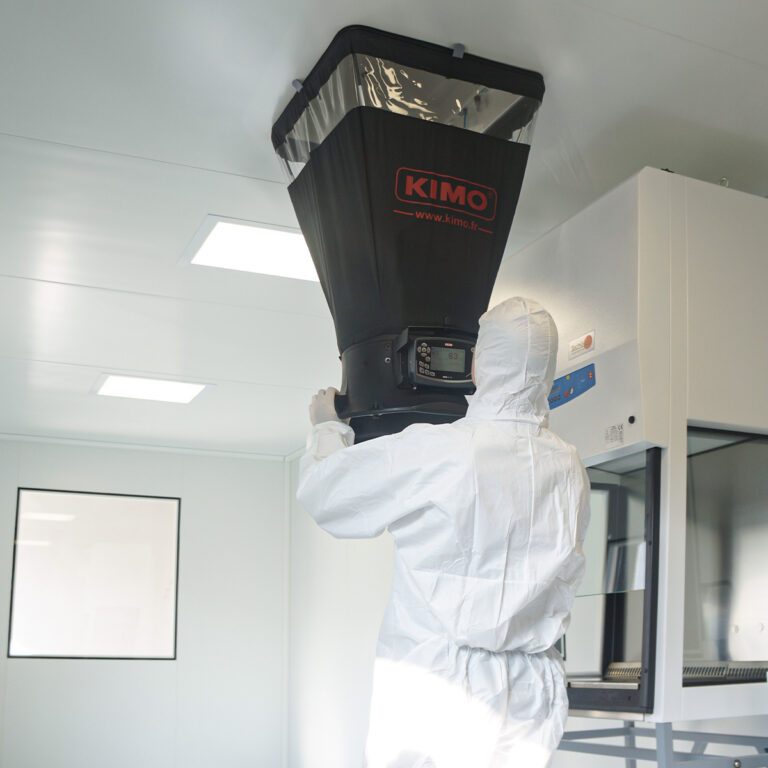
Leak tightness evaluation usually begins with a pressure test. This involves pressurizing the network and measuring pressure drops over a given period. A differential pressure gauge is used to precisely quantify these leaks. The more sophisticated tracer gas tests use special detectors to pinpoint the exact location of leak points.
To ensure optimum watertightness, several complementary techniques can be used:
- Use of special lip seals and sealants for connections
- Applying self-adhesive sealing strips to joints
- Installation of flexible sleeves at equipment connections
- Selection of certified low-leakage dampers
- Recourse to AEROSEAL® technology
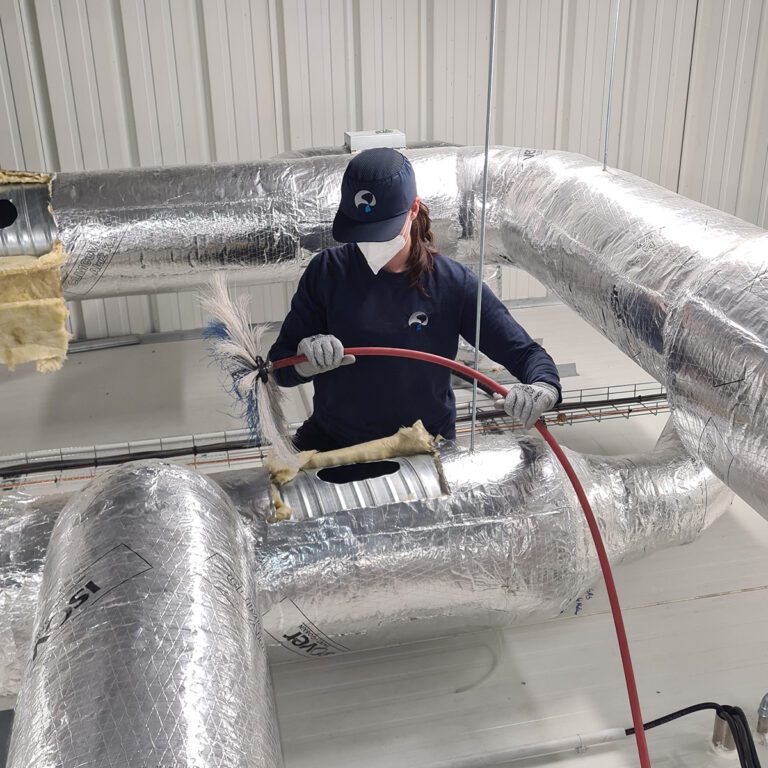
To date, the AEROSEAL® technology is one of the most advanced methods of sealing a ventilation network. It is an innovative solution for sealing leaks by spraying a polymer inside the ducts. This process treats micro-leaks and hard-to-reach areas, guaranteeing a uniform, long-lasting seal throughout the network, while significantly reducing pressure losses and optimizing energy efficiency.
The waterproofing class to be achieved must be defined at the design stage. European standards establish four classes (A to D), corresponding to increasing levels of performance. For modern commercial buildings, class C is generally the minimum acceptable, while class D is recommended for sensitive installations.
It's also good practice to check the seal regularly. Vibrations, temperature variations and the natural ageing of materials can gradually degrade the seal initially achieved.
For building managers, investing in the airtightness of ventilation systems is not only a sound technical choice, but also a sound economic decision, given the substantial energy savings generated over the operating life of the system.
Best practices for the design and installation of a watertight network
Designing an airtight network requires a rigorous technical approach right from the design phase. Choose circular ducts, which are less prone to leaks than rectangular sections, and select accessories with integrated joints to limit critical interfaces and facilitate installation.
Watertight discontinuities occur mainly at connections and end joints. To avoid them, use prefabricated factory joints, avoid improvised tappings, and apply elastomeric sealants and reinforced adhesive tapes complying with standards, such as NF DTU 68.3. Mechanical fastening is essential: joints must be tightened with clamps or screw clamps, and sheaths held in place with multiple fasteners (metal angles, clamps) to prevent distortion.
During installation, pay particular attention to sensitive areas: duct connections and connections to the ventilation motor. Tightness is a shared responsibility: the design office specifies appropriate technical solutions, the manufacturer supplies certified materials, the installer follows installation procedures, and the operator carries out periodic checks (AeroSeal method).
Optimal sealing thus combines standardized design, high-performance materials, rigorous assembly and proactive maintenance, guaranteeing energy efficiency and system durability.
FAQs
Q1. How do you assess the airtightness of a ventilation system?
The tightness of a ventilation network is generally assessed by pressure tests, in which pressure drops are measured over a given period. More advanced methods, such as tracer gas testing, enable leakage points to be pinpointed.
Q2. What are the consequences of a leaking ventilation system?
A poorly sealed ventilation system can lead to excessive energy consumption, degraded indoor air quality, increased noise levels, premature wear and tear on equipment, and difficulties in maintaining the required pressures and flow rates.
Q3. What are the best practices for designing an airtight ventilation network?
To design a watertight network, we recommend circular ducts, fittings with integrated joints, careful application of appropriate sealant and adhesive tape, and proper mechanical fastening of components.