












1. What is cleanroom qualification?
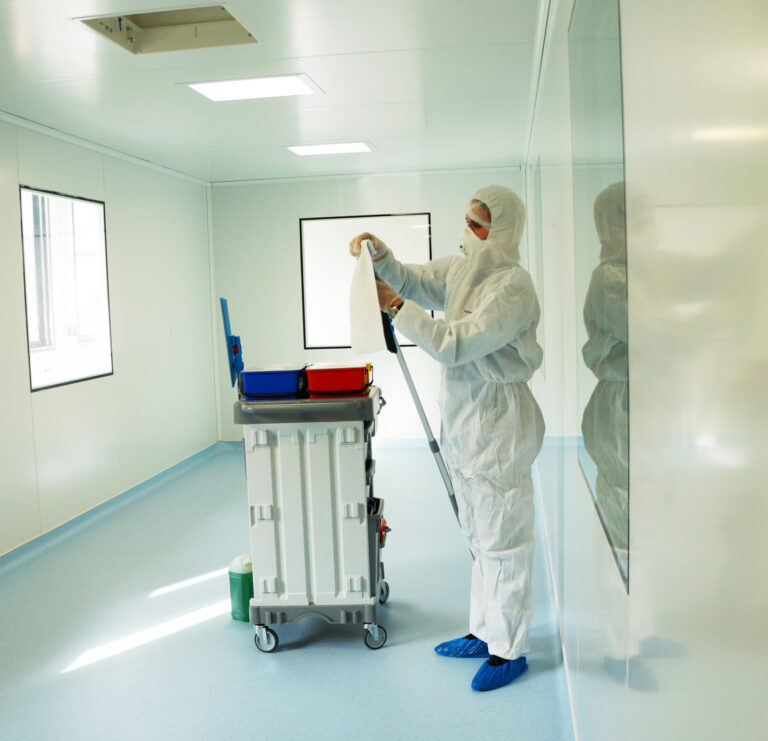
Visit cleanroom qualification is based on a rigorous process that verifies compliance with the cleanliness criteria defined by standards such as ISO 14644. Each room must maintain strict control over airborne particles, pressure, temperature and humidity, in order to stay within the limits specific to its own environment. ISO class.
Stages of cleanroom qualification :
- Design Qualification (DQ) This stage validates the conformity of the plan and technical specifications with regulatory requirements and user needs.
- Installation Qualification (IQ) : Technicians check the installation of all equipment and systems, ensuring that they are correctly positioned and conform to validated plans.
- Operational Qualification (OQ) : Teams test the operation of equipment under simulated conditions to verify its performance and efficiency.
- Performance Qualification (PQ) The experts evaluate the room's performance under real-life conditions, to confirm that it meets the expected cleanliness criteria.
Thanks to this structured approach, professionals can secure the working environment and guarantee optimum conditions for sensitive applications: pharmaceutical production, microelectronics research, handling complex materials, etc.
2. Critical parameters to be monitored when qualifying cleanrooms
During the cleanroom qualification, several parameters must be carefully monitored and evaluated:
- Particle counting Measuring the concentration of airborne particles to ensure compliance with the ISO class of the room.
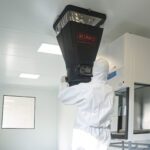
- Air change rate Calculate the frequency with which air is renewed to maintain a clean environment.
- Air speeds Check that air circulation is even and avoids particle build-up.
- Differential pressure Maintain a pressure differential between zones to prevent cross-contamination.
- Integrity test HEPA filters: Perform tests to ensure that these filters effectively remove fine particles.
These parameters ensure compliance with the’ISO 14644-1 and ensure an environment conducive to laboratory activities. Laboratories must perform tests to maintain plant compliance and safety.
Practical example A laboratory carrying out biological tests on human samples must ensure that the ambient air remains in line with its own standards. ISO class. This prevents any contamination that could affect search results.
3. Performing tests and maintaining compliance
To obtain cleanroom certification, it is essential to undergo regular and rigorous testing. These tests guarantee the room's compliance with international standards and the requirements of manufacturing practices.
- Suspended particle test Airborne particle monitoring to ensure compliance with defined thresholds.
- Air flow and renewal tests Ensure proper air circulation and replacement.
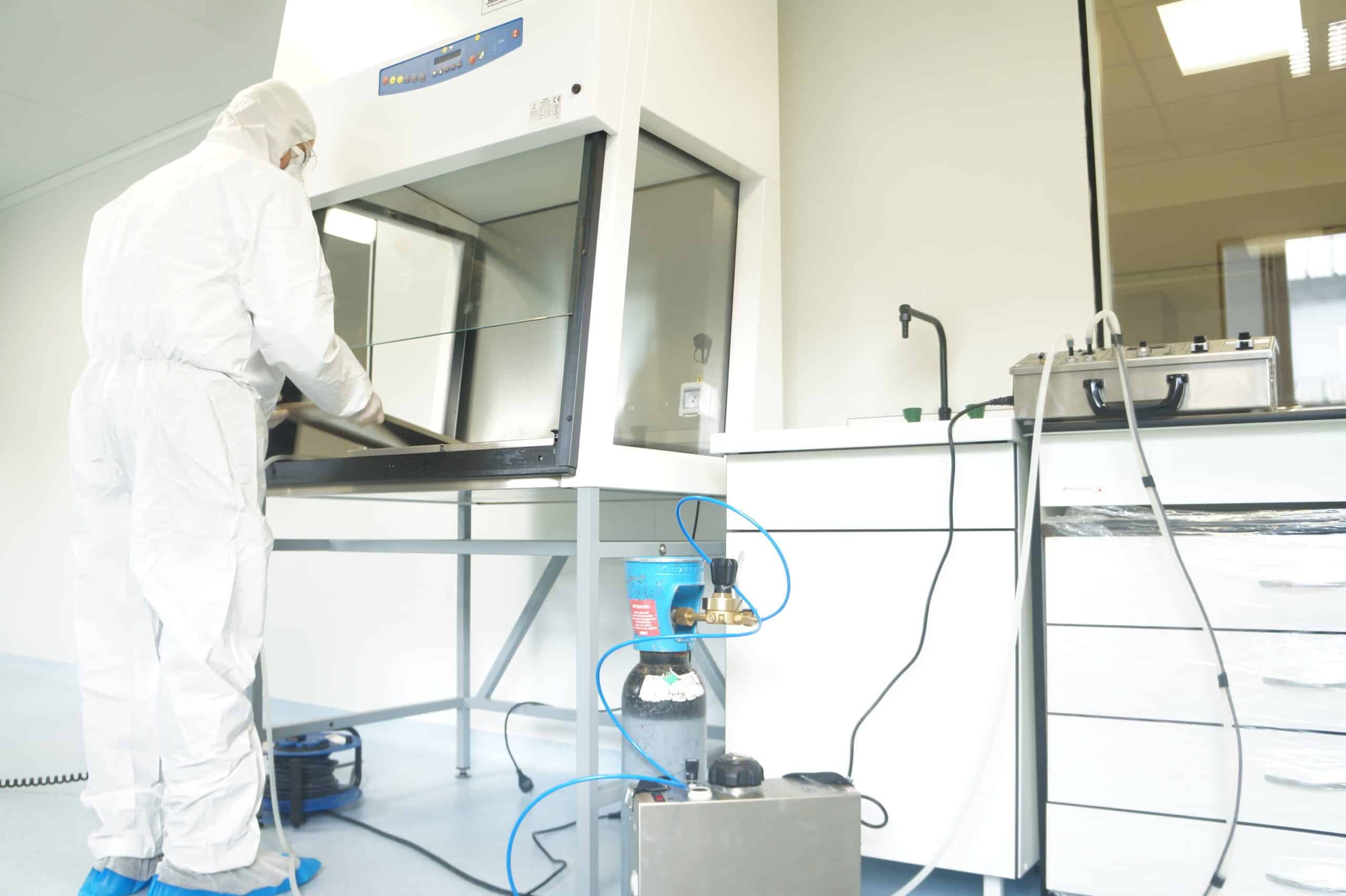
- Integrity test HEPA filters: Confirm their efficiency in retaining particles.
- Recovery tests Control the room's ability to return to optimal conditions after contamination.
These tests prove that the room meets the criteria of the’ISO 14644 and guarantees a compliant environment for laboratory activities. Continuous monitoring is essential to ensure that critical parameters remain stable, avoiding any risk of non-compliance.
Find out more about the importance of indoor air quality in working environments.
4. Challenges and best practices for cleanroom qualification
Qualification of clean rooms can present a number of challenges, particularly as technologies and regulatory requirements evolve. The complexity of today's research demands increasingly precise and controlled conditions, requiring constant adaptation of laboratories to remain compliant.
Best practices for a successful qualification:
- Continuous control : Implement real-time monitoring systems to ensure the stability of critical parameters.
- Proactive maintenance : Carry out regular checks and maintain equipment to ensure optimum performance.
- Regular training Training staff in good handling practices to maintain the cleanliness and integrity of the facilities.
Commitment to maintaining a high level of indoor air quality and perform tests contributes to a safe and compliant environment, ensuring the protection of sensitive research and projects.
Cleanroom qualification, a priority for laboratories
Visit cleanroom qualification plays a key role in ensuring that laboratories comply with international standards, such as the’ISO 14644-1. From rigorous testing, a regular monitoring and a proactive maintenance ensure a controlled environment. These best practices ensure the quality of projects, the safety of products and the reliability of results, while protecting sensitive experiments and promoting scientific innovation.
IGIENAIR EXPERTISE: Guaranteeing quality controlled environments
At IGIENAIR, we put our expertise for laboratories and critical environments to guarantee optimum working conditions in line with the most stringent standards. As specialists in ultra-cleanliness, we can help with cleanroom qualification and the’plant audit, to maintain safe and compliant environments. ISO 14644 regulations.
Our teams provide :
- Comprehensive audits to assess plant performance, identify areas for improvement and guarantee compliance.
- Rigorous testing, HEPA filters and air circulation, to validate the criteria of cleanliness, pressure and air renewal.
- Personalized support in the maintenance and continuous monitoring of critical parameters, to ensure long-term compliance.
With IGIENAIR, We provide each laboratory with the expertise it needs to comply with international standards, while improving the safety and efficiency of its facilities. We work with you to ensure that indoor air quality and the cleanliness of sensitive environments are always guaranteed.